Blog Post
Heritage Homes: Balancing Preservation with Modern Building Approaches
August 9, 2026
Why Heritage Homes Matter
Older homes are worth preserving.
They offer a level of craftsmanship, detail, and character that is difficult to replicate using today’s standard building practices. From hand-turned spindles and ornate corbels to original wood windows and curved cedar details, heritage homes tell stories about the people, materials, and methods that shaped our communities.
At the same time, preserving these homes doesn’t mean freezing them in time. Modern building codes, updated materials, and improved construction methods can coexist with historical authenticity when approached thoughtfully.
The key is balance: respecting the original design while ensuring the home remains safe, functional, and sustainable for future generations.
Understanding the Difference Between Repair and Replacement
One of the most important things homeowners should understand is that building codes distinguish between form and function.
In many cases, repairs to an existing heritage structure are allowed without triggering major approval requirements. However, when a homeowner replaces structural elements or introduces new construction such as rebuilding a porch or replacing original columns - permits and updated plans are usually required.
This creates an important challenge for heritage properties:
How do you meet modern structural standards while preserving the original architectural appearance?
The answer often involves creative problem-solving, collaboration with experienced professionals, and a disciplined approach to materials and craftsmanship.
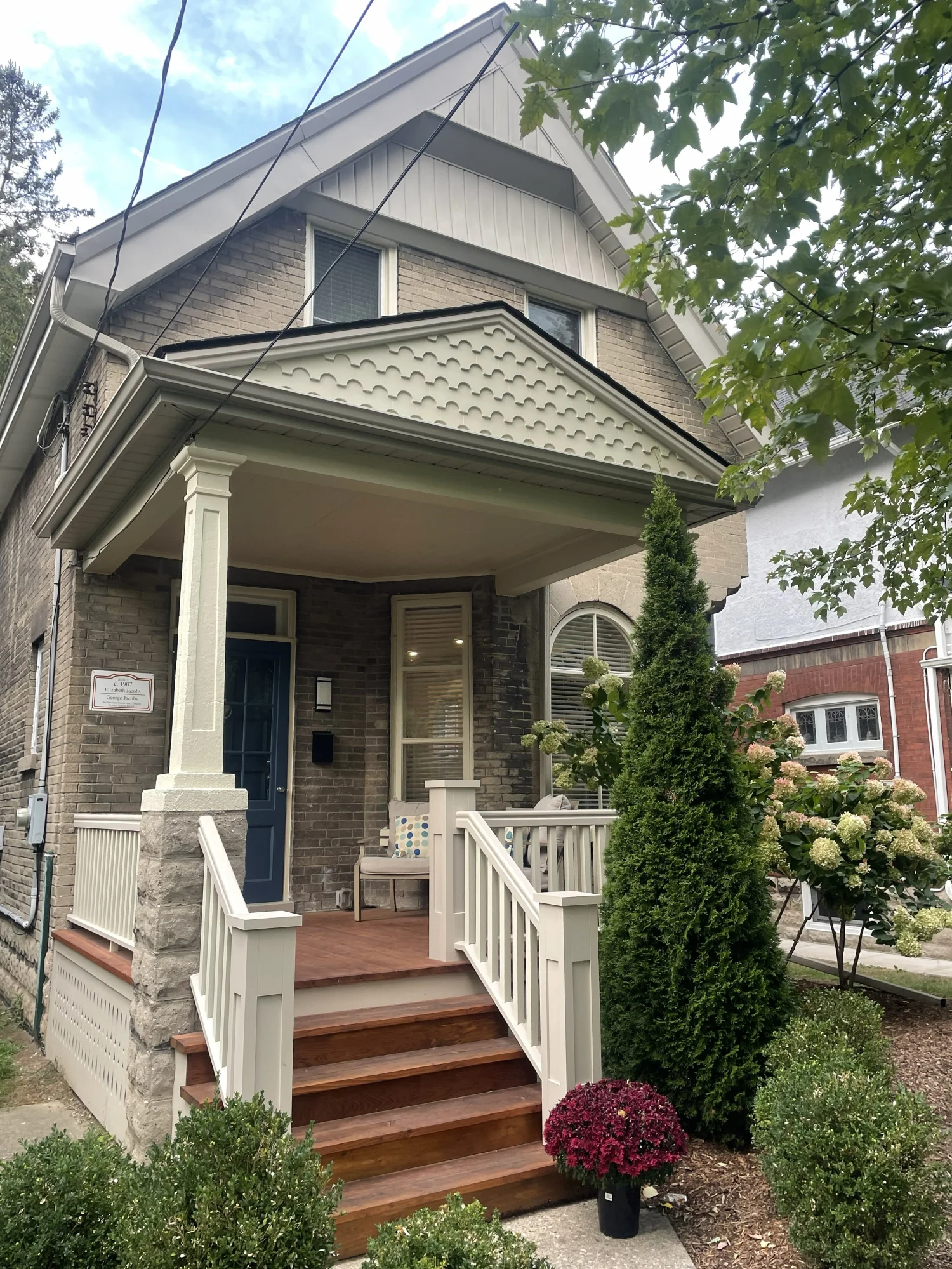
The Lost Art of Architectural Ornament
A century ago, much of what went into a home was handmade.
Today’s manufacturing systems prioritize efficiency, consistency, and precision. While modern products are durable and uniform, they often lack the subtle imperfections and craftsmanship that give heritage homes their warmth and charm.
Historical architectural details can include:
• Spindles
• Corbels
• Decorative brackets
• Curved cedar elements
• Hand-finished trim
They were often shaped by craftspeople using techniques that are far less common today.
That doesn’t mean these details are impossible to recreate.
Post-and-beam construction and ornamental detailing can still be incorporated into modern restoration work. However, not every engineer or contractor is familiar with these methods, which is why choosing the right professionals is essential.
Maintenance Is the Best Preservation Strategy
Regular maintenance is one of the most important investments a homeowner can make.
Simple upkeep such as painting, caulking, repairing wood deterioration, and managing moisture can prevent small issues from becoming major structural problems.
Too often, homeowners wait until damage becomes severe enough that repair is no longer possible. At that point, replacement becomes necessary, and original materials or craftsmanship may be lost forever.
The lesson is simple:
Address problems early, before preservation becomes reconstruction.
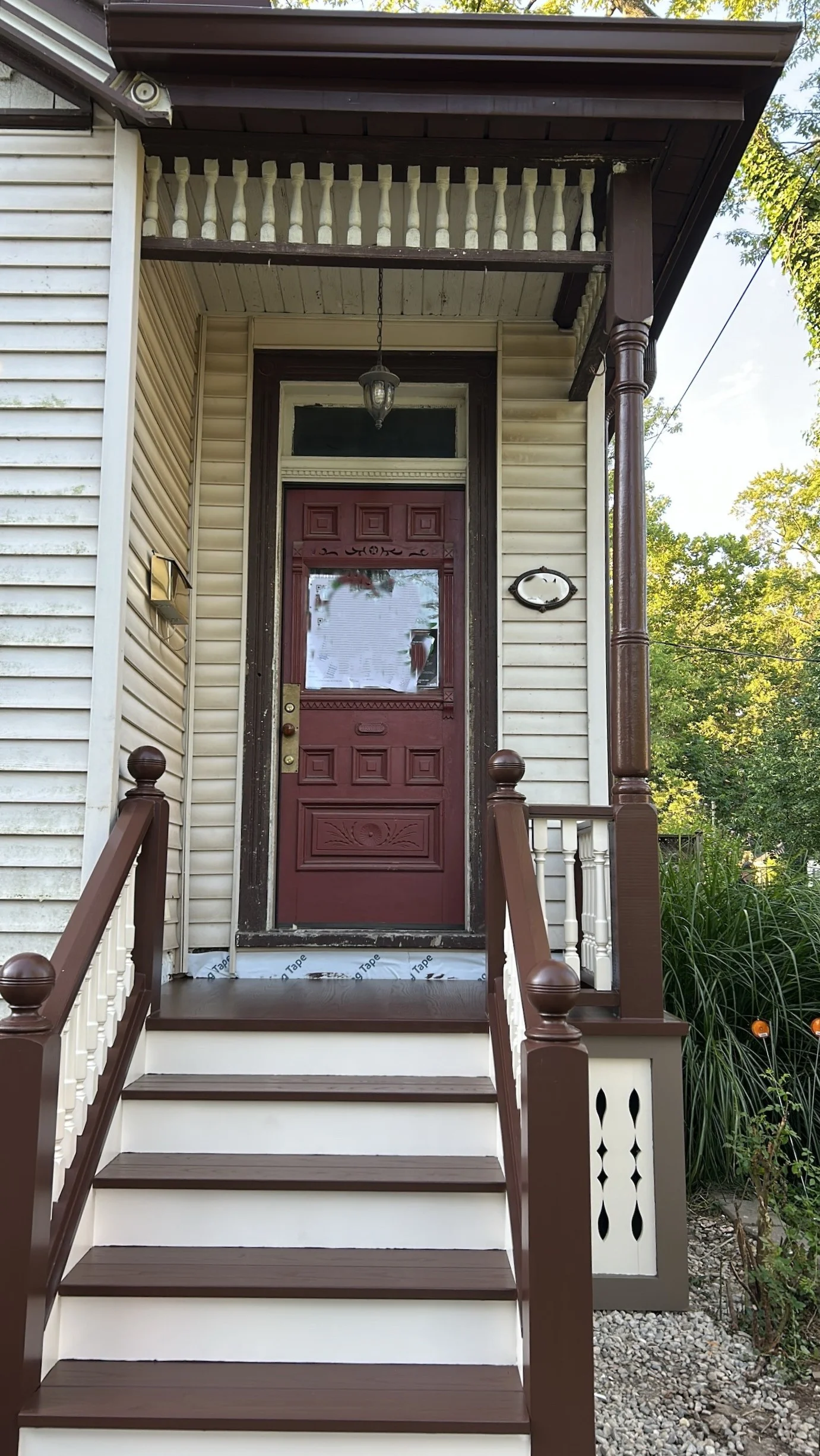
Matching the Right Skills to the Right Work
Restoring a heritage property requires specialized knowledge.
Different trades focus on different aspects of construction, and not every contractor has experience with historical materials or preservation methods. As a result, even well-intentioned repairs can unintentionally alter the character of a home.
For example, replacing a curved cedar detail with an angled cut may seem minor, but these subtle changes gradually erode the authenticity of a heritage property.
Some restoration techniques such as steam bending wood to recreate original curves require highly specialized craftsmanship.
That’s why experienced heritage professionals are invaluable. They understand not only how to repair older homes, but how to preserve the details that make them historically significant.
Heritage Planning and Approvals
From a heritage planning perspective, many historically accurate repairs do not require formal heritage approval.
In general:
• Repairing original details using historically appropriate materials is often permitted
• Replacing damaged elements with accurate reproductions may also be allowed
• Heritage planning primarily focuses on exterior features that contribute to the streetscape and cultural character of the neighborhood
However, homeowners should remember that:
Heritage approval and building department approval are two completely different processes governed by different legislation.
When in doubt, it is always better to ask questions before beginning work.
Obtaining a Heritage Alteration Permit is typically straightforward when the proposed work aligns with district guidelines. Retroactive approvals, on the other hand, can be far more difficult.
Health and Safety Considerations in Older Homes
Preserving older homes also means understanding the materials commonly used when they were built.
Lead-Based Paint
Lead-based paint was widely used in homes built before 1960 and continued to appear in some exterior coatings into the 1990s.
Lead paint can still be found on:
• Walls
• Trim
• Doors
• Cabinets
• Porches
• Exterior siding
If the paint remains intact and undisturbed, it may not pose an immediate hazard. In some situations, encapsulating or covering the material is safer than removing it.
However, deteriorated paint, dust, and fumes can present serious health risks. Professional testing and removal are strongly recommended.
Asbestos
Asbestos was commonly used prior to 1990 in:
• Insulation
• Cement products
• Floor tiles
• Ceiling tiles
• Plaster compounds
• Fireproofing materials
Like lead, asbestos is often safest when left undisturbed or professionally encapsulated. If asbestos-containing materials are suspected, homeowners should hire trained professionals for testing and remediation.
What We’ve Learned About Heritage Conservation
Heritage conservation benefits entire communities.
Thoughtful restoration and sensitive design choices help preserve the places people value while allowing homes to adapt to changing needs.
Successful heritage work involves collaboration between:
• Homeowners
• Heritage planners
• Designers
• Skilled tradespeople
• Engineers
• Contractors
When these groups work together, it becomes possible to modernize a home without losing the qualities that make it historically meaningful.
Helpful Resources for Heritage Homeowners
The presentation highlighted several valuable resources for homeowners interested in heritage preservation:
Heritage and Planning Resources
• City of London Register of Cultural Heritage Resources: www.london.ca/heritage
• City of London Maps: www.london.ca/maps
• Heritage Planning Contact: heritage@london.ca | 519-930-3500
• Heritage Conservation District Guidelines: https://london.ca/heritage-conservation-districts
• Ontario Heritage Act: https://www.ontario.ca/laws/statute/90o18
Funding Opportunities
• London Endowment for Heritage Fund: https://www.lcf.on.ca/london-endowment-for-heritage
Health and Safety Information
• Government of Canada – Lead-Based Paint Safety: https://www.canada.ca/services/home-safety/lead-based-paint.html
• Government of Canada – Asbestos Health Risks: https://www.canada.ca/en/health-canada/services/air-quality/indoor-air-contaminants/health-risks-asbestos.html
Final Thoughts
Heritage homes require patience, knowledge, and care.
While modern building practices prioritize speed and standardization, heritage restoration asks us to slow down and consider the long-term cultural value of craftsmanship, materials, and historical continuity.
Preserving older homes is not simply about maintaining buildings. It’s about protecting the architectural identity of our neighborhoods, honouring the craftsmanship of the past, and ensuring future generations can experience the beauty and character that heritage properties bring to our communities.
And when uncertainty arises, one principle always applies:
Ask questions early and work with experienced professionals.
That approach saves time, protects historical integrity, and leads to better outcomes for everyone involved.
Looking at starting your very own Heritage Home Project? Talk to the experts. We would love to help you with your upcoming projects, and can help guide you to making it an easier process.